Sabtu, Ogos 20, 2011

Kaid Wanita

Wanita memiliki perancangan yang hebat. Kelebihan ini telah dirakamkan oleh al-Quran yang menceritakan tentang isteri Menteri Mesir (riwayat Israiliyyat konon menamakannya Zulaikha) dalam kisah Yusuf: 

“Ini adalah perancangan kamu (kaum wanita), dan sesungguhnya perancangan kamu (kaum wanita) itu hebat”. (Surah Yusuf: 28).

Gambar Hiasan
Perkataan Arab yang al-Quran gunakan dalam ayat berkenaan ialah Kaid yang bermaksud perancangan yang mempunyai unsur licik dan muslihat. Sebab itu Louay Fatoohi dalam bukunya The Prophet Joseph menterjemahkan perkataan Kaid sebagai scheme yang bermaksud tindakan yang licik dan perancangan sulit yang kadang-kala membabitkan tipu daya (ms 86. Kuala Lumpur: Islamic Book Trust).

Atas kelicikan itu, ramai lelaki yang tewas. Wanita ada kuasa ‘licin’ dan licik. Walaupun Nabi Yusuf tidak tewas, tetapi ramai lelaki selain nabi yang tewas dengan ‘kaid’ atau perancangan halus dan ‘sulit’ wanita. Senjata rahsia wanita pada tubuh, air mata, suara, bahasa, jelingan, pujuk rayu dan sebagainya. Walaupun bukan semua mereka ada kelebihan tersebut, namun bagi yang berkelebihan jika perangkapnya mengena, sukar untuk lelaki terlepas daripadanya, kecuali mereka yang memenangkan takwanya atas godaan atau kaid tersebut.

Nabi s.a.w pernah bersabda:

“Aku tidak tinggal cubaan yang lebih hebat ke atas lelaki lebih dari wanita” (Riwayat al-Bukhari dan Muslim).

Sabda baginda juga:

“Sesungguhnya dunia itu manis lagi hijau dan Allah menjadikan kalian berketurunan di atasnya. Allah melihat apa yang kalian perbuat. Takutlah kamu kepada (fitnah) dunia dan takutlah kamu kepada (fitnah) wanita, karena sesungguhnya awal fitnah yang menimpa Bani Israil dari wanitanya” (Riwayat Muslim).

Maka, tidak hairan berapa ramai pemimpin yang gagah, terkenal, tetapi ditewaskan oleh wanita idamannya, atau isteri kesayangannya. Betapa banyak reputasi pemimpin dirosakkan disebabkan seorang bernama WANITA.
Baca selanjutnya ...

Khamis, Ogos 18, 2011

Apa Niat Kita Menulis?

Setelah beberapa bulan blog yang teman sukai tidak diupdate, lantas teman bertanya kepada empunya blog "tuan, kenapa lama tak update blog?", dan lantas tuan punya blog menyatakan dalam senyuman dengan kata "Mula-mula je semangat, lepas tu senyaplah".

Ayuh kita tafakkur sejenak dan tanyakanlah pada diri sendiri, apakah kita mentajdidkan niat sebelum menulis blog, empunya diri yang menulis punyai jawapannya. Andainya ilmu yang ingin dikongsikan itu amat bermakna maka silalah tebarkan kalimah-kalimahnya, supaya menjadi amal jariah dan ilmu bermanfaat yang akan diamalkan oleh orang lain. Andainya blogger menulis kerana ingin menempah populariti atau pangkat melalui dunia maya, maka tulislah apa sahaja karangan yang sedap dibaca, susunlah kalimah-kalimah pujangga, usah difikirkan ianya bermakna atau tidak. Usah difikirkan tentang integriti dan responsibiliti. 

Dosa si tangan itu bukan semestinya merompak dan mencuri harta manusia, bukan semestinya melukakan badan sesiapa, tapi dosa tangan dan jari-jemari itu boleh bermula dengan sebab salahnya tulisan yang disebar pada manusia atau sebab tidak dititipkan jari menaip untuk perkongsian ilmu yang bermanfaat.

Semoga para penjenguk blog menemui blog-blog yang lebih bersih niat hatinya dan lebih 'alim ilmunya. Semoga kebaikan yang kita impikan itu kita jua beroleh manfaatnya.
Baca selanjutnya ...

Ten tips writing Blog.


Ten tips writing Blog.
  1. Make your opinion known
  2. Link like crazy
  3. Write less
  4. 250 Words is enough
  5. Make Headlines snappy
  6. Write with passion
  7. Include Bullet point lists
  8. Edit your post
  9. Make your posts easy to scan
  10. Be consistent with your style
  11. Litter the post with keywords
1. Make your opinion known
People like blogs, they like blogs because they are written by people and not corporations. People want to know what people think, crazy as it sounds they want to know what you think. Tell them exactly what you think using the least amount of words possible.


2. Link like crazy.
Support your post with links to other web pages that are contextual to your post.
3. Write Less
Give the maximum amount of information with the least amount of words. Time is finite and people are infinitely busy. Blast your knowledge into the reader at the speed of sound.
4. 250 is enough
A long post is easier to forget and harder to get into. A short post is the opposite.
5. Make Headlines snappy
Contain your whole argument in your headline. Check out National newspapers to see how they do it.
6. Include bullet point lists
We all love lists, it structures the info in an easily digestible format.
7. Make your posts easy to scan
Every few paragraphs insert a sub heading. Make sentences and headlines short and to the point.
8. Be consistent with your style
People like to know what to expect, once you have settled on a style for your audience stick to it.
9. Litter the post with Keywords.
Think about what keywords people would use to search for your post and include them in the body text and headers. make sure the keyword placement is natural and does not seem out of place.
10. Edit your post
Good writing is in the editing. Before you hit the submit button, re-read your post and cut out the stuff that you don’t need.

Baca selanjutnya ...

Rabu, Ogos 17, 2011

21 Ways to Make Your Blog or Website Sticky

What is a ‘Sticky’ Site?

A sticky website is one where a first time reader arrives and finds it difficult to leave.

Not because the site owner captures them in a ‘RickRoll’ or a series of windows asking them if they REALLY want to leave – but because something about the site motivates them to explore it further – and more importantly to make a decision to (and takes some steps to ensure that they) return again to it.

21 Techniques to Make Your Site Sticky

The following 21 techniques are ways that you can make your blog or website more sticky. They come from my own experience of blogging over the last 5 years. As a result of basing this on personal experience I’m going to show you quite a few examples of what I’ve done (after all i know my own sites best). I’d love you to add your tips and show examples of what you’ve done in comments below to make it a more useful resource for readers.

1. Make Your Invitations to Subscribe to your blog Prominent

One of the most important things to do is to have a prominent call to action for readers coming to your blog to subscribe to it.

In fact I’d recommend having more than one invitation – one prominent one above the fold and prominent in your sidebar or navigation area and then a second one below your post. This means that people are triggered to subscribe whether they have just arrived on your blog or if they’ve just finished reading a post (a ‘pause point‘).

This is what I do on my blogs and my tracking shows that both get a fairly even number of people using the two options.


2. Educate Readers about Your Subscription Methods

One of the most read posts here on ProBlogger is my ‘what is RSS‘ post which I have below my Subscription link. It’s there simply to educate readers on what RSS is and in doing so sell them a way to connect with my blog. Interestingly enough – quite a few other bloggers around the web now link to the page to educate their readers too.

Similarly – I occasionally will write a post on my blogs that invites new readers to subscribe. Sometimes I think we mistakenly assume that all of our readers have been with us for a long time and all know how to use our site – however many of your newer readers might not know the full story.

Here’s one of these posts that I ran on DPS last year. The day after I did this my RSS subscribers jumped considerably. It was just a matter of educating my newer readers of the blog on how they could connect better with it. You’ll also note that at the end of the post I asked readers to let me know how they follow the blog. This was for two reasons:

Firstly I wanted to involve older readers who already knew all the information in the post. It somehow seemed to make the post more relevant for them as it invited them to participate.

Secondly it was about social proof and showing newer readers how others used the site. I think the comments section reflected some of this.


3. Good Blog Design

I’ve always believed that a good blog design is an important part of helping readers to decide whether they’re going to hang around and track with your site over the long haul.

Readers make judgements about your site within seconds of arriving at it – if they see something cluttered and confusing they’ll be less likely to want to return.

Good design highlights your content, helps people navigate your site well and creates a good impression – and first impressions matter!

Keep your design simple, familiar and obvious and you’ll be on the road to a sticky site.

PS: A common mistake that I see bloggers making is to crowd out their content with too many ads above the fold. If a reader arrives at your site and has to scroll to see the content you’ll increase the numbers of people who simply hit the ‘back’ button on their browser.


4. On Site Branding

Work hard at building a brand that is attractive and draws people in.

First time readers should know what your blog is about at a first glance. Use your blog’s title, it’s design, taglines, post titles, about pages, logo and navigational elements to communicate what your blog is about.

Also – do something to differentiate the brand of your blog. It could be a logo, image, color scheme, blog name….


5. Make Your Blog Personal

One thing that I’ve seen a number of bloggers do really well over the last year or two is brand themselves well on their blog. While it’s not essential to have a blog that is centered around your personal brand I find that when you do add a personal touch to your blog that it can connect with readers in a powerful way.

The fact is that some readers are more interested in connecting with a person than a collection of content.

Adding your photo, writing in a personal tone, using video/audio and including personal details and stories of how you engage with your topic can give your blog personality which will draw some of your readers into a relationship with you.


6. When you get a rush of traffic to one particular post….

When the spikes in traffic come along you need to be ready to act (and act fast – because they can be momentary).

Add invitations to subscribe to your feed within your post. Something along the lines of ‘enjoy this post? Get more like it by subscribing to….’ can work really well.

It can also be worthwhile adding links at the end of your post to ‘further reading’ on posts that are getting lots of reader to them.

Sometimes when you get a spike it can even be worth writing a ‘welcome’ post. For example if I get a mention in a mainstream media publication that sends significant traffic I’ll often do a post that welcomes people but also gives them a ‘tour’ of the site (example).

Another clever move is to quickly write up a followup article to the one that is getting all the traffic. For example – if this post suddenly got a burst of traffic I could quickly write a post ’10 more ways to make your blog sticky’ and then add a link to that post at the end of this one (update: actually I wrote one called 7 more ways to make your blog sticky). This shows readers that you’ve got more to say on your topic than just one post. Every extra page view is a step closer to them subscribing (if the pages they view are good quality).

These ‘hot posts’ are really important to optimize (learn how to optimize popular posts).


7. Get Interactive

Getting someone to DO something on your blog means that they’ve invested something into your blog and increases the likelihood that they’ll return.

Interactive blogs are often also sticky ones. Interaction could include

Comments

Competitions

Polls

Projects and Memes

As a result it’s worth spending some time Learning how to get readers to comment on your blog – and exploring other ways to make your blog more interactive. Get your readers involved as much as you can!

The other bonus for ‘giveaways’, ‘special offers’ and ‘competitions’ is that when you do them regularly some readers will subscribe because they don’t want to miss out on future giveaways. The current competition might not interest them but they sure want to know when you do one in future.


8. Add a ‘subscribe to comments’ feature to your blog

This draws those who comment back to continue the conversation and increases the chances of them becoming loyal readers.

You’ll find that only some readers will ever use this – but even if just a few do you’ve had a win.

I have this enabled here at ProBlogger (I don’t have it on by default – those leaving comments have to choose to subscribe because I don’t want to inundate them with comments) and at any given time there are several hundred people subscribed to comments on posts. I use this subscribe to comments plugin to run mine.

PS: just be aware that if you get a lot of unmoderated comment spam it can be a little embarrassing to have this feature – I learned the hard way.


9. Respond to Comments


This is a particularly effective way to draw readers back to your blog – particularly in the early days when you don’t have a lot of readers commenting to follow up.

There are two main ways you can do this:

respond to comments with comments

respond to comments with emails to the comment leaver

Showing those that comment on your blog that you’re interacting with them can make a real impression and will often draw them back time and time again.


10. Offer alternative ways to subscribe


Some readers will respond well to your prominent invitation to subscribe via RSS (see #1 above) but others will be more open to connecting in other ways.

I generally offer three subscription methods:

RSS

Daily email updates (RSS to Email)

Weekly newsletter (summary of the blog from the last week plus some exclusive content)

More recently I’ve also been offering readers the ability to track with my blogs via Twitter and send my latest posts to my Twitter account via TweetBurner.

Why so many options? The answer is simply that each reader has their own systems in place to consume content and connect with websites – so offering a variety of methods increases the chances that you’ll be doing something that they are familiar with.


11. Promote social media connecting points

Similarly – some of your readers will respond very well to your invitations to connect on other social media sites.

For example I have some readers on DPS who are Facebook junkies. They refuse to subscribe via RSS or email but religiously read my blog by following my Facebook profile which pulls in my latest posts.

Another small group of readers here at ProBlogger follow this blog through Technorati’s favorites feature. While I prefer to read blogs using an rss reader like Google Reader – their rhythm of reading content revolves around Technorati. As a result I’m happy that I promoted my Technorati profile (you can favorite ProBlogger here).

While you might not see the sense in people following your blog in some of these social media sites others do and at the very least promoting them can potentially reinforce your brand.


12. Highlight Your Best Content

A great way to convince readers to become loyal is to get them reading more than one of your posts (especially if they are your best posts). You can do this by linking to other posts within your content but also suggesting further reading and ‘best of’ posts around your blog.

For example – here at ProBlogger on my front page the ‘best of ProBlogger’ section is one of the most clicked upon parts of my site. This small section of the site sends people deep within the blog to some of my best work – hopefully resulting in quite a few new loyal readers.

At DPS I have a small section on my sidebar called ‘Digital Photography Tips’ which is a list of ‘sneeze pages‘ (or compilation pages of my best posts in certain categories). Again – these are there simply to draw people deep into the site and get them viewing some of the best the site has to offer (and hopefully to convince them to subscribe).


13. Create Momentum With Your Content

When you give readers a sense that you’re creating more content that they’ll want to read you give them a reason to subscribe.

For example when a reader reads the first part of a series of posts on a topic that they find useful you can count on them wanting to read the rest.

I wrote about this in a post on creating a sense of anticipation on your blog.


14. Consider Removing Dates on Old Posts

This one could be a little controversial but I find that when old posts are not dated that it doesn’t create a ‘oh this is old’ type reaction in your readers.

I’ve seen this numerous times here on ProBlogger where posts written back in 2005 have attracted comments like ‘this is old’ or ‘out of date tips’ – even when the content has been of a ‘timeless’ or evergreen nature.

Personally I think that you should consider the type of blog you have before doing this. For me it works on DPS where I’ve never had dates on posts – but not here at ProBlogger where I have a topic that is more time specific (I’ll write more on this topic in coming days).


15. Give Incentive to Subscribe


Over the last few days I’ve had a small competition going on Digital Photography School where I’m giving 3 subscribers to my newsletter there a copy of a great photography book.

1500 new subscribers later (and counting that small incentive is one of the best $50 I’ve ever spent.

Give away a book, free ebook or report, download or some other incentive to those subscribing to your blog’s feed or newsletter and you could give some readers the little extra incentive to connect that they needed.

It need not be anything expensive (or that costs you anything at all) – just make it a small bonus and see what impact that might have.


16. Keep Posting Frequency Up

One thing that I do as a blog reader deciding whether I’ll subscribe to a blog or not is to head to the home page and see how often they’ve updated recently.

There’s nothing more frustrating as a reader than to find some great content and be hungry for more only to find that the blogger hasn’t update in 3 months.

I don’t think you need to update every day – but something in the last week shows that your blog is up to date. You can also highlight this by showing your most recent posts somewhere in your sidebar.


17. Create an Engaging About Page


Another thing that I often do when I go to a new blog is to look at it’s ‘about page‘.

I like to know who is behind a blog, what their goals for it are, how it started and other information about what the blogger is on about.

This is an opportunity to sell your blog to and make a connection with prospective readers who are going out of their way to find out more about you – so use it to tell your story and draw readers in to journey with you.

PS: whatever you do – don’t let your about page be the default about page that comes with your blog.


18. Add a Community Area or Forum

One of the best things that I ever did with my photography site was to add a forum.

I cannot express to you just how sticky that area of DPS is!

While readers come to the blog once a day to read new content – some of them come to the forum ALL DAY – racking up literally hundreds of page views a week.

Forums won’t attract all of your readers (I suspect they attract some personality types and not others) – but they will connect with some and help make your site a lot stickier.


19. Social Proof

Does your blog have readers already? If so (and even if it’s just a few) highlight this in any way that you can and you’ll show other first timers that they’re not the only one reading your blog.

People attract people and a site that is obviously being read by others will draw others into it.

This can be difficult in the early days of a blog when you don’t have a lot of activity – but as it builds show it off.

Highlight new comments, show subscriber numbers when you have them, quote readers comments, find a way to slip your stats into a post occassionally etc.

It’s a bit of a snowball effect – once you have readers they’ll bring others in.

One thing that I occassionally do at DPS on my subscribe page (a page dedicated to talking readers through 3 subscription options) is to not only highlight the options but to tell people how many people are using them. In this way those considering subscribing get a sense that they’re actually becoming a part of something that has momentum and thousands of others joining.


20. Target Readers with Specific Messages


Here are a few tools and plugins out there that enable you to present specific messages to certain readers coming to your blog based upon where they’ve arrived from and if they’ve been to your blog before.

LandingSites is a WP plugin that shows readers arriving from search engines related posts on the search term that they’ve searched for.

What Would Seth Godin Do is a plugin that welcomes new readers to your blog with a special message and invitation to subcribe.

Got any other plugins and tools for targeting readers with specific messages? Feel free to share them in comments below.


21. Sticky Content


Lastly (and most importantly in my mind) – the key to sticky sites is sticky content.

You can have the best designed site in the world with lots of the above features – but unless readers who come to it find something that connects and brings them life in some way – you’re unlikely to get them back tomorrow. Writing engaging content needs to be your number one Priority.

Darren Rowse
Baca selanjutnya ...

Selasa, Ogos 16, 2011

10 Tips Nilai Kompetensi Diri Sendiri

Setiap kerja akan dinilai. Setengah individu melihanya sebagai mimpi ngeri yang sukar untuk ditempuh. Kekadang kita telah berusaha semaksimum tenaga tetapi penilaian yang diberikan tidak memuaskan.  Sebenarnya apa yang menjadi penilaian (baik kualitatif atau kuantitatif)? Setiap  organisasi memiliki parameter yang berbeza-beza. Namun secara umum memiliki kesamaan dalam perkara-perkara tertentu seperti:
  1. Pengetahuan tentang kerja. Berkaitan dengan pengetahuan, kemampuan dan wawasan pada bidang pekerjaan yang dijalankan.
  2. Prestasi Kerja. Berdasarkan job knowledge tersebut, diharapkan ia dapat memenuhi standard yang ditetapkan.
  3. Komitmen. Kesetiaan kepada tugas dan organisasi melebihi tanggungjawab, semangat untuk maju, kecenderungan belajar dan mengembangkan diri. Komitmen ini  tidak boleh dilihat dalam jangka pendek. Dalam komitmen ini, konsistensi menjadi penting, jika anda hanya mempunyai komitmen dalam waktu pendek, tidak konsisten, maka pihak atasan tidak melihatnya sebagai  komitmen yang boleh dipertanggungjawabkan.
  4. Proaktif. Orang yang selalu proaktif dan berinisiatif, tentunya akan mendapat nilai lebih bagus dibanding mereka yang hanya melakukan pada tugas-tugas yang diberikan. Menyelesaikan tugas dengan baik, belum cukup dan perlu mengembangkan kerjaya serta melihat peluang baru.
  5. Produktiviti. Penilaian adalah juga berasaskan jumlah produk dan perkhidmatan yang diberikan. Jika kuantitinya di bawah sasaran yang ditentukan, anda dianggap tidak perform.
  6. Kemampuan mengurus. Kemampuan dalam membuat perancangan kerja, keluwesan berfikir, kecekapan dalam mengenalpasti dan mengatasi masalah dan memimpin kumpulan.
  7. Integriti.  Sejauhmana anda mampu  mempertahankan prinsip dan nilai-nilai yang anda miliki dalam menjalankan kerja. Anda boleh fleksibel, tetapi anda bukan orang yang boleh berkompromi jika berkait dengan prinsip dan nilai profesion.
  8. Keluwesan Bergaul. Anda boleh bergaul dan berkomunikasi  sesama rakan sekerja, atasan dan bawahan. Keluwesan bergaul adalah salah satu indikasi bahawa anda membina produktiviti di dalam lingkungan kerja.
  9. Kehadiran. Kehadiran anda yang baik, tentu akan dilihat sebagai orang yang disiplin dan akan mempengaruhi penilaian.
  10. Penampilan. Sebenarnya ini bergantung kepada bidang pekerjaan anda.  Yang terpenting kita dilihat rapi dan bersih.

Baca selanjutnya ...

Ahad, Ogos 14, 2011

Don't Simply Give Up

Sung-bong Choi
I thought my life was tough, but he changed my cheap thinking. When I was listening to his story and his song, I couldn't stop tears from falling. I hope only good things happen to him for the many days ahead of him. To Choi, you are a wonderful example and inspiration to people who have not.

You are really a great boy who does not simply give up whatever the circumstances in life. How sad your life story but still you did not lost your passion to show your great talent that touching the hearts of the Korean people and may be the world. A humble boy like you there's no reason to reach the stardom. I shared your video in my blog to let other people to watch and aware about the beautiful story of your life.


Baca selanjutnya ...

Sabtu, Ogos 13, 2011

Mengapa Guru Perlu Kreatif dan Inovatif?

Profesor Andy Hargreaves dalam bukunya Teaching in the Knowledge Society (2003) ada menyatakan bahawa pendidikan pada masa ini sedang berada dalam the age of insecurity. Dalam keadaan yang serba tidak menentu ini, guru akan memainkan salah satu daripada peranan berikut:
  • Guru menjadi pemangkin yang mempercepatkan proses globalisasi;
  • Guru menjadi penghalang keburukan-keburukan hasil daripada globalisasi; dan
  • Guru menjadi mangsa globalisasi kerana mereka tidak dapat mengikuti rentak dan perubahan semasa.
Guru perlu kreatif dan inovatif untuk menghasilkan pengajaran & pembelajaran yang berkesan dalam memainkan peranan sebagai pemangkin atau pengadang kepada keburukan hasil globalisasi dan tidak menjadi mangsa kepada globalisasi.

Melalui pengajaran & pembelajaran kreatif dan inovatif guru, murid dapat memperoleh ilmu pengetahuan, menguasai kemahiran dan mengamalkan sikap dan nilai serta dapat mengembangkan daya kreativiti dan inovasi mereka.

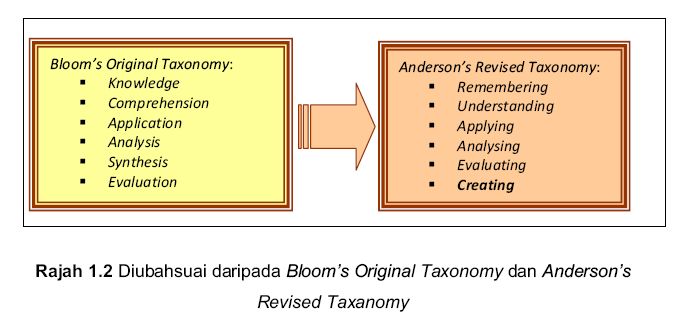
Oleh itu bagi kita yang telah sebati dengan Taksonomi Bloom, perlu juga melihat Taksonomi Anderson dalam menjana idea kreatif dalam pengajaran dan pembelajaran.

Baca selanjutnya ...

Khamis, Ogos 11, 2011

Softskill

Kemahiran insaniah atau soft-skills merupakan kemahiran generik yang merentasi pelbagai domain pembelajaran merangkumi aspek keperibadian dan kerja berkumpulan. Selaras dengan kepentingannya, Kementerian Pengajian Tinggi telah memperkenalkan Kemahiran Insaniah yang perlu diterapkan kepada para pelajar di institusi pengajian tinggi

Terdapat tujuh elemen utama Kemahiran Insaniah yang diperkenalkan iaitu 
  1. kemahiran berkomunikasi, 
  2. pemikiran kritis dan kemahiran menyelesaikan masalah, 
  3. kemahiran kerja berpasukan, 
  4. pembelajaran berterusan dan pengurusan maklumat, 
  5. kemahiran keusahawanan, 
  6. moral dan etika profesional; dan
  7. kemahiran kepemimpinan
Baca selanjutnya ...

Rabu, Ogos 10, 2011

Siapa Kita Sebenarnya!

Hari itu selepas seminggu beraya di kampung, saya pulang ke Kuala Lumpur. Memikirkan highway PLUS sibuk, saya menyusuri laluan lama. Pekan pertama yang saya lintas ialah Teluk Intan. Terasa mengantuk, saya singgah sebentar di sebuah restoran di pinggir pekan itu. Sebaik memesan makanan, seorang kanak-kanak lelaki berusia lebih kurang 12 tahun muncul dihadapan.

"Abang nak beli kuih?" katanya sambil tersenyum. Tangannya segera menyelak daun pisang yang menjadi penutup bakul kuih jajaanya.

“Tak apalah dik... Abang dah pesan makanan," jawap saya ringkas.

Dia berlalu. Sebaik pesanan tiba, saya terus menikmatinya. Lebih kurang 20 minit kemudian saya nampak kanak-kanak tadi menghampiri pelanggan lain, sepasang suami isteri agaknya. Mereka juga menolak, dia berlalu begitu saja.

 "Abang dah makan, tak nak beli kuih saya?" katanya selamba semasa menghampiri meja saya.

"Abang baru lepas makan dik. Masih kenyang lagi ni," kata saya sambil menepuk-nepuk perut.

Dia beredar, tapi cuma setakat di kaki lima. Sampai di situ, di meletakkan bakulnya yang masih sarat. Setiap yang lalu ditanya, "Tak nak beli kuih saya bang, pak cik, kakak atau makcik?"

Molek budi bahasanya! Mamak restoran itu pun tidak menghalang dia keluar masuk ke premisnya bertemu pelanggan. Sambil memerhati, terselit rasa kagum dan kasihan di hati saya melihatkan betapa gigihnya dia berusaha. Tidak nampak langsung tanda-tanda putus asa dalam dirinya, sekalipun orang yang ditemuinya enggan membeli kuihnya.

Selepas membayar harga makanan dan minuman, saya terus beredar ke kereta. Kanak-kanak itu saya lihat berada agak jauh di deretan kedai yang sama. Saya buka pintu, membetulkan duduk dan menutup pintu. Belum sempat saya menghidupkan enjin, kanak-kanak tadi berdiri di tepi kereta. Dia menghadiahkan sebuah senyuman. Saya turunkan cermin, membalas senyumannya.

"Abang dah kenyang, tapi mungkin abang perlukan kuih saya untuk adik-adik abang, ibu atau ayah abang." katanya petah sekali sambil tersenyum. Sekali lagi dia mempamerkan kuih dalam bakul dengan menyelak daun pisang penutupnya.

Saya tenung wajahnya, bersih dan bersahaja. Terpantul perasaan kesian di hati. Lantas saya buka dompet, dan menghulurkan sekeping not merah RM10. Saya hulurkan padanya.

"Ambil ni dik! Abang sedekah. Tak payah abang beli kuih tu," Saya berkata ikhlas kerana perasaan kasihan meningkat mendadak. Kanak-kanak itu menerima wang tersebut, lantas mengucapkan terima kasih terus berjalan kembali ke kaki lima deretan kedai. Saya gembira dapat membantunya. Setelah enjin kereta saya hidupkan, saya mengundur. Alangkah terperanjatnya saya melihat kanak-kanak itu menghulurkan pula RM10 pemberian saya itu kepada seorang pengemis yang buta kedua-dua matanya.

Saya terkejut, lantas memberhentikan semula kereta, memanggil kanak-kanak itu.

"Kenapa bang nak beli kuih ke?" tanyanya.

"Kenapa adik berikan duit abang tadi pada pengemis tu? Duit tu abang bagi adik!" Kata saya tanpa menjawap pertanyaannya.

"Bang saya tak boleh ambil duit tu. Mak marah kalau dia dapat tahu saya mengemis. Kata mak kita mesti bekerja mencari nafkah kerana Allah berikan tulang empat kerat pada saya. Kalau dia tahu saya bawa duit sebanyak itu pulang, sedangkan jualan masih banyak, mak pasti marah. Kata mak, mengemis kerja orang yang tak berupaya, saya masih kuat bang!" katanya begitu lancar.

Saya sebak, sekaligus kagum dengan pegangan hidup kanak-kanak itu. Tanpa banyak soal saya terus bertanya berapa semua harga kuih dalam bakul itu.

"Abang nak beli semua ke?" Dia betanya dan saya cuma mengangguk. Lidah saya kelu nak berkata.

"RM25 saja bang."

Selepas dia memasukkan satu persatu kuihnya kedalam plastik, saya hulurkan RM25. Dia mengucapkan terima kasih dan terus berlalu.

Saya perhatikan dia sehingga hilang daripada pandangan. Dalam perjalanan ke Kuala Lumpur, baru saya terfikir untuk bertanya statusnya. Anak yatimkah? Siapakah wanita berhati mulia yang melahirknya? Terus terang saya katakan, saya beli kuihnya bukan lagi atas dasar kasihan, tetapi kerana rasa kagum dengan sikapnya yang dapat menjadikan kerjayanya satu penghormatan.

Sesungguhnya saya kagum dengan sikap kanak-kanak itu. Dia menyedarkan saya, siapa kita sebenarnya!
Baca selanjutnya ...

Selasa, Ogos 09, 2011

Jom Tangkap Ikan

Y Office has implemented an exciting way to make our office an enjoyable place to come each day, where both staff and clients can feel comfortable and at ease. It means finding a nice balance between having a good time and maintaining productivity.


To help us achieve our goals, we have implemented the FISH! Philosophy (based on the book by Stephen C Lundin, Ph.D.) about the Pike Place Fish Market in Seattle, USA. Although life as a fish monger can be unpleasant, the staff at this market decided to focus on the positives and came up with four different ways to improve their workplace:

· Choose Your Attitude,
· Play,
· Be Present
· Make Their Day.

Choose Your Attitude – There is always a choice about the way you go about your work, even if there is not a choice about the work itself. Choose to have a great day.


Play – Having fun at work leads to a happier and healthier work environment for you and your clients. Be serious about your work without being too serious about yourselves.


Be Present – Observe what is going on around you and be there with a helping hand when others need you.


Make Their Day – Focus on ways to make others around you have a great day. Create a positive flow of energy and encourage it to grow with words of encourage, a helping hand or a good ear.


These four categories make up the theory behind FISH! and must all be represented equally to achieve the best results.


Of course, this theory is not only relevant to places that handle fish. At Y Office, we have created a FISH! reward system. Every Monday at morning, everyone is given the opportunity to give a "fish" to someone that they believe has displayed a FISH! behaviour during that week. Our "fish" are fish-shaped coloured pieces of paper on which you write why you have chosen to award a fish to that team member. During morning meeting, each receiver reads their fish to the group so that everyone is aware of their achievement. Each of our fish has one of the four categories written on them so everyone can see where the receiver has excelled.


Being surrounded by items that remind us of the FISH! Theory is another key to its success. With our fish bowls, signs on most of the walls around the office and our personal “Which Attitude Do You Choose?” labels, it’s easy to keep our goals in the front of our minds.
Baca selanjutnya ...